

Langstone Mill Farm: Focused on Flock Health and Breeding Excellence
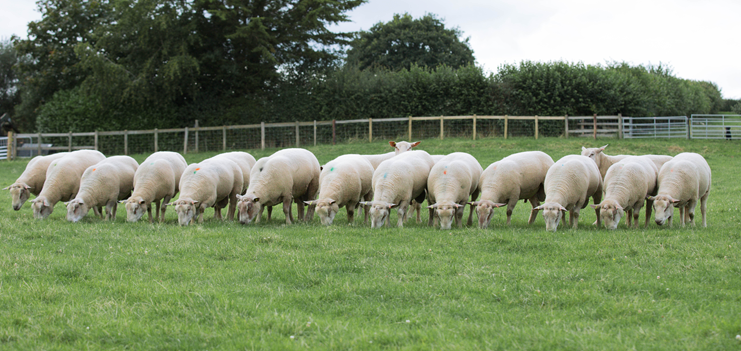
Langstone Mill Farm, near the Herefordshire town of Ross-on-Wye, has been in the family for over sixty years. Today, it operates as a family partnership, with Nick and Mimi Hart teaming up with daughter, Louise and her husband, Mathew last year. Together, they manage 70 acres of permanent pasture and a pedigree Charollais flock that has been the cornerstone of the farm since 1983.
The Flock and Breeding Strategy
Having started with just three ewes and a ram lamb, the farm now runs over 100 pedigree Charollais ewes, as well as ram and ewe lambs and three stock rams, with at least one new ram purchased annually. Since 1995, the flock has been closed to outside females, a deliberate decision to reduce disease risk. Breeding objectives focus on growth, milk, conformation, and minimal disease, with yearling rams sold mainly for crossbred finished lamb production.
Finished lambs from the March-lambing flock are processed through ABP, providing carcass grading feedback. In 2025, 117 lambs, mostly E and U grades, were finished by mid-July.
Genetic Progress and Performance Recording
Langstone Mill is Signet recorded, enabling data-driven breeding decisions. Recent results include two females in the top 1% and three males in the top 10% for terminal index, reflecting consistent genetic improvement.
Biosecurity and Preventative Health: The Foundation of Success
Biosecurity underpins every aspect of flock management. Measures include:
- Padlocked gates and controlled visitor access with foot dips.
- Disinfected ear tags and strict hygiene protocols.
- Quarantine for purchased rams, with foot checks, formalin washes, and full screening for iceberg diseases, fluke, and scab.
- Comprehensive vaccination: clostridial and pasteurella for all sheep, orf for lambs, and toxoplasma for yearling ewes before tupping.
- Regular blood testing for fluke and Johne’s disease.
These measures have significantly reduced the disease profile of the flock. Langstone Mill maintains low-level foot rot, no CODD, and, since 2022, all yearling ewes have been tested for Johne’s and had negative results.
MV Accreditation: A Key Advantage
The flock has been MV (Maedi Visna) accredited since 2001. MV is a chronic viral disease that impacts productivity and welfare. Accreditation ensures the flock meets strict health standards and remains free from MV, offering:
- Access to MV-approved sales and markets.
- Buyer confidence for pedigree and breeding stock.
- Long-term flock health and performance.
For Langstone Mill, MV accreditation is a critical selling point and a reflection of its commitment to health and quality.
Disease Management and Vigilance
Past challenges, including scrapie in 1993 and Schmallenberg in 2012, have reinforced the farm’s proactive approach. Vaccines programmes for diseases such as BTV-3 (bluetongue) are adopted promptly to mitigate emerging threats. While Johne’s scheme membership is currently restricted due to water source and flooding, rigorous monitoring continues.
Looking Ahead
Langstone Mill aims to increase ewe numbers and continue producing rams that deliver growth, conformation, and health traits for the UK finished lamb market. With biosecurity and high health status at the core, the farm is well-positioned for the future.
Posted by SRUC Veterinary Services on 09/01/2026
