

Getting ewes ready for tupping
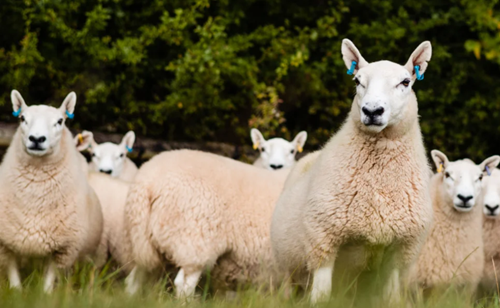
With many producers focusing attention on drafting lambs for marketing, it is important not to overlook the breeding flock. There are several factors which contribute towards a successful tupping, arguably ewe condition alongside nutrition is the most important. Ensuring ewes have sufficient body reserves pre-mating is essential to promote ovulation.
While tupping for many flocks won’t kick off until much later in the autumn, for those flocks lambing in April and May now is the time to prepare and ensure ewes are in the best possible condition to conceive.
Forage availability and planning
Post-weaning, ewes are often sent out to the hill, onto rougher pasture or older leys, while the prioritised lambs get the newer lays, silage aftermaths or forage crops. While this is a useful utilisation of lower quality grassland alongside aiding the drying off the ewes, it is important that ewes are not forgotten about.
As grass growth begins to slow down during early autumn, now is also the time to start planning to manage grazing available over mating. Decide and plan which fields ewes will be grazing pre-tupping, during tupping and post tupping to ensure there is sufficient grazing available during the duration of the mating period.
Condition scoring and preparation
Ewes should have been body condition scored (BCS) post-weaning to allow for adjustments to be made before introducing the tup. Body condition scoring ewes in advance of tupping will allow time to prepare for ewes to be in the desired body condition towards the tupping period. The desired BCS will differ between different systems and breeds. Body condition scoring should take place at least 10 weeks pre-tupping to allow for thinner ewes to be allowed time to gain condition. It is important to avoid sudden changes in diet, and it is recommended that this is done gradually over time to avoid big changes that potentially can be detrimental to performance.
A 70kg lowland ewe at tupping should be in BCS 3.5 – 4.0 compared with a 50kg hill ewe with the aim being 2.5 – 3.0. Ewes already within the target BCS should be maintained until tupping. If however, a 70kg lowland ewe at were weaned at BCS 2.5 they would need to gain in the region of 7kg. For this to happen the ewe will require 1.84kg/dm/day over the 10 weeks to achieve the 3.5 BCS. For most ewes, maintenance will be around 1kg of dry matter (4-6kg as fed) of an average quality grazing that is around 10 MJ/kg DM.
Trace element and mineral status of ewes is also vitally important for tupping success. Trace elements such as selenium, cobalt and iodine all play key roles in ewe fertility. A blood test can be a useful tool to determine whether supplementation is necessary. This should be carried out within sufficient time for mineral status to be corrected before tupping, if required.
Jamie Houstoun, Agricultural Consultant, Jamie.Houstoun@sac.uk
Posted by SAC Consulting on 21/09/2026
